 Image 1 of 1
6.125 × 3.875 in
Hand-cut International Currency Collage on Archival Paper
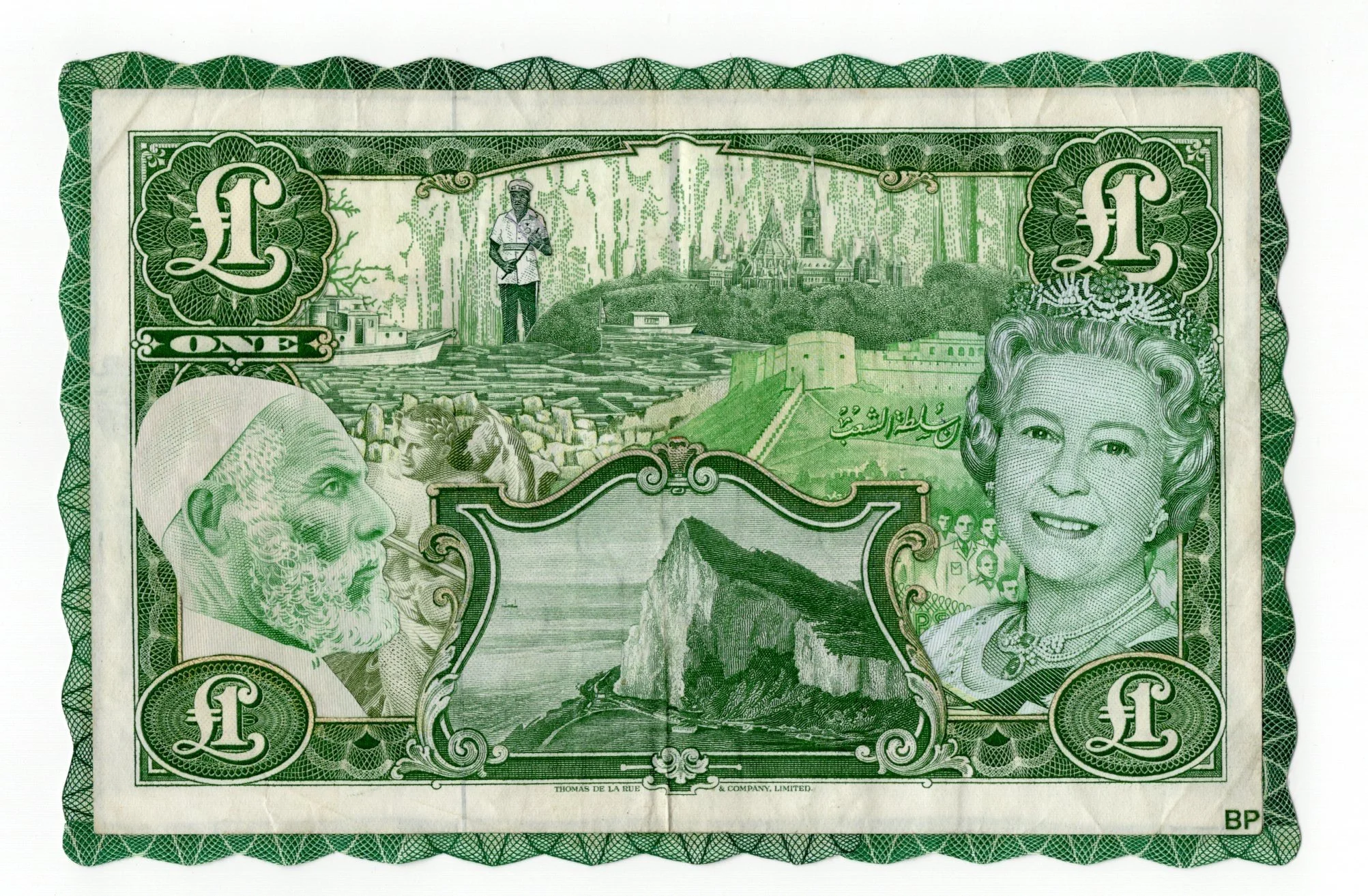
This piece started with the frame from Gibraltar, a 1 Pound example from 1965. Because of the value behind it, our intentions had to rise to meet it. Banknotes came from an incredible supporter who had traveled and collected them herself, so before touching anything myself, there was already movement and lived experience embedded. Gibraltar, Brazil, Peru, and Canada came directly from her, a gesture of thoughtfulness I tried to match. Banknotes from Libya, the Bahamas, Zimbabwe, and Mozambique were used not to force narrative but to let these places and people sit together in harmony.
At the center the shorelines of Gibraltar sit untouched. Two figures create the core tension. On the left, Omar al Mukhtar from the Libya 10 Dinars looks across the piece toward someone opposite him. To the right, Queen Elizabeth II faces forward, composed. His look feels loaded, maybe admiration, resentment, curiosity, even infatuation, but whatever it is, it is directed at her. The Queen hardly acknowledges. That disconnect started to feel heavy. It is one side engaging and the other not needing to.
Behind the Queen lie the people of Libya and the Sabha Fortress. It feels out of place, like Omar’s world has been repositioned behind her. Behind Omar, I pulled a figure of industry from the Brazil 10 Cruzeiros note, a kneeling worker who sits in judgement as witness to Omar. Peru’s Sacsayhuamán fortress sits alongside Libya’s Sabha Fortress.
Further back, scene opens into Ottawa, with Parliament Hill and Ottawa River logging scene visible. The Missanabie tugboat pushes through broken logs, feeling less personal and more like industry and governance. At the back, the Royal Bahamas Police Band watches over the scene.
Is it still an exchange if only one side must participate?
6.125 × 3.875 in
Hand-cut International Currency Collage on Archival Paper
This piece started with the frame from Gibraltar, a 1 Pound example from 1965. Because of the value behind it, our intentions had to rise to meet it. Banknotes came from an incredible supporter who had traveled and collected them herself, so before touching anything myself, there was already movement and lived experience embedded. Gibraltar, Brazil, Peru, and Canada came directly from her, a gesture of thoughtfulness I tried to match. Banknotes from Libya, the Bahamas, Zimbabwe, and Mozambique were used not to force narrative but to let these places and people sit together in harmony.
At the center the shorelines of Gibraltar sit untouched. Two figures create the core tension. On the left, Omar al Mukhtar from the Libya 10 Dinars looks across the piece toward someone opposite him. To the right, Queen Elizabeth II faces forward, composed. His look feels loaded, maybe admiration, resentment, curiosity, even infatuation, but whatever it is, it is directed at her. The Queen hardly acknowledges. That disconnect started to feel heavy. It is one side engaging and the other not needing to.
Behind the Queen lie the people of Libya and the Sabha Fortress. It feels out of place, like Omar’s world has been repositioned behind her. Behind Omar, I pulled a figure of industry from the Brazil 10 Cruzeiros note, a kneeling worker who sits in judgement as witness to Omar. Peru’s Sacsayhuamán fortress sits alongside Libya’s Sabha Fortress.
Further back, scene opens into Ottawa, with Parliament Hill and Ottawa River logging scene visible. The Missanabie tugboat pushes through broken logs, feeling less personal and more like industry and governance. At the back, the Royal Bahamas Police Band watches over the scene.
Is it still an exchange if only one side must participate?